
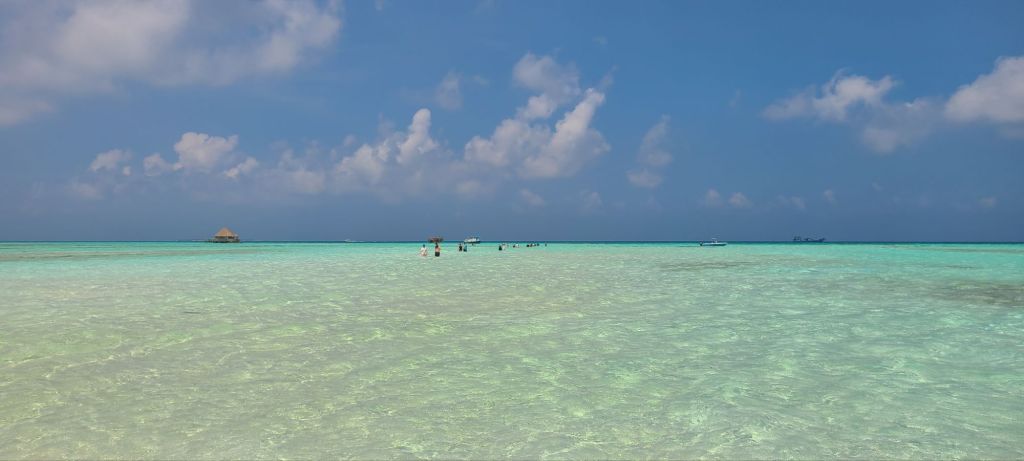
Maldives remain a bucket-list destination for so many people. As a sailor, I expected it to be like a trip to a Pacific Island nation, with lots of sandy little islands, palm trees, a local village, some great snorkeling and diving, and a relaxed, friendly atmosphere geared around visitors. It really wasn’t.
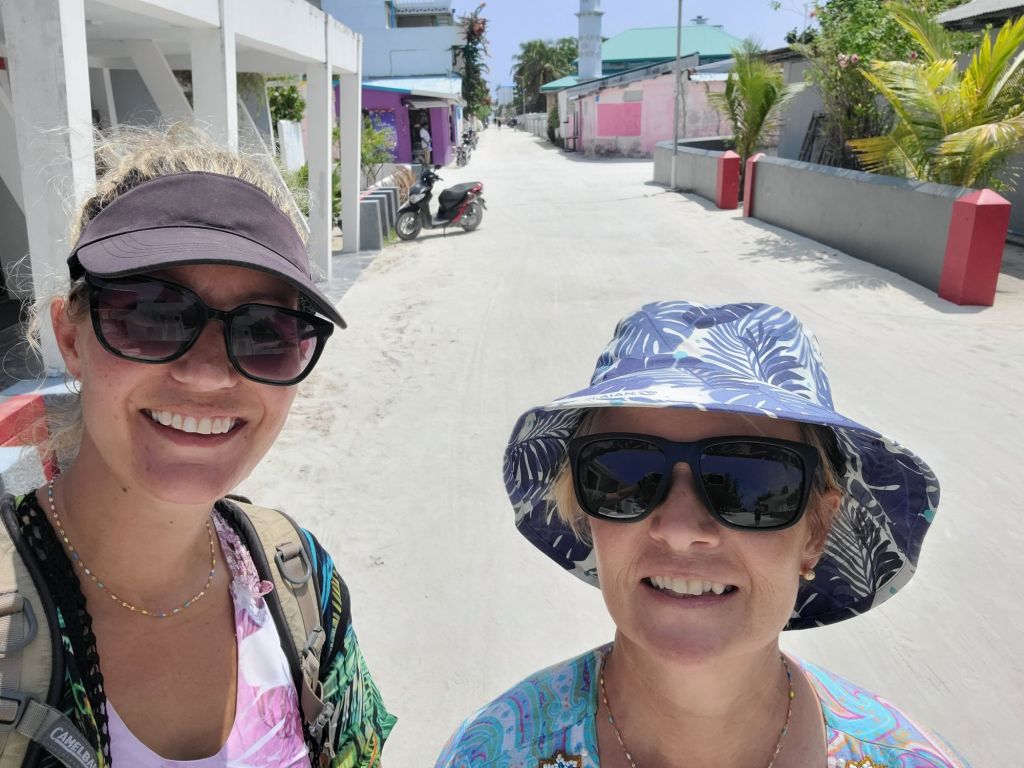
There’s no denying that it’s beautiful (at least the outer atolls are). It’s just that it was such hard work and expensive to visit Maldives in a sailing yacht. We engaged a ship’s agent, which is essential here to navigate around the beauracracy. He organised to have the officials come to us when we first arrived to do the Customs clearance. This cost $250 USD. Then there was a cost for every time he signed someone on and off the boat. We had to have an atoll cruising permit, more money, and more days of waiting for it to be issued. We also had to have a tracker on the boat (which was hired to us for the time we were there). The tracker didn’t work as it had the wrong plug fitting, but we were still expected to use and pay for it. Each day, we were charged $8 USD as an anchoring fee. We spent quite a lot of time anchored in the commercial port next to a rubbish barge, with that lovely bin-juice smell and fending off giant mosquitoes 🦟, but it meant that it was easy to do grocery shopping and collect visitors from the airport.
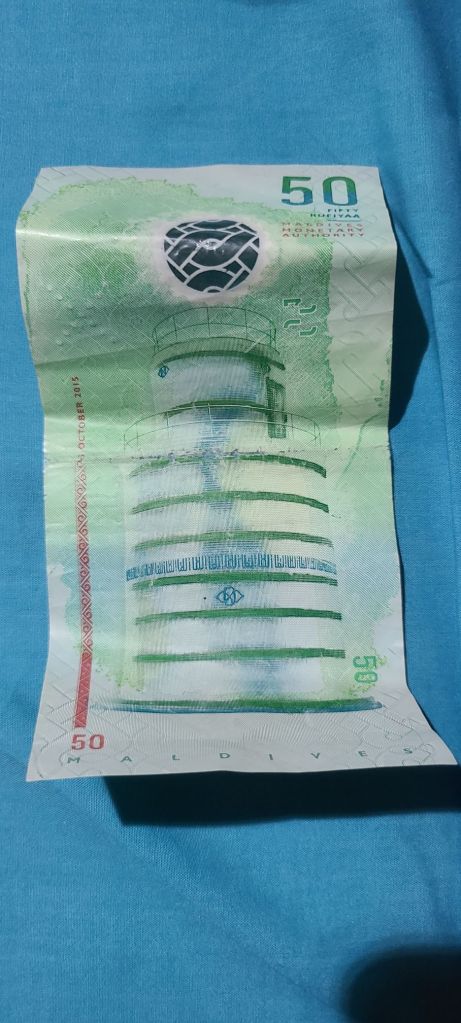
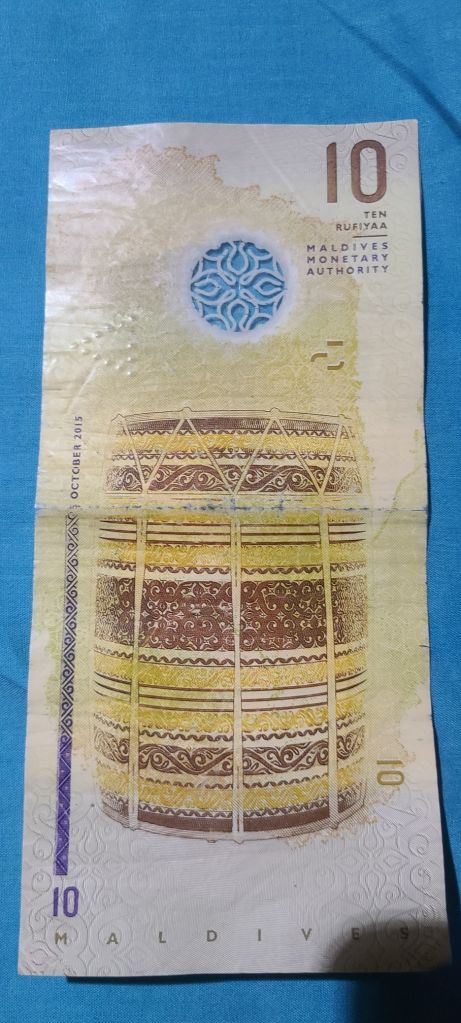
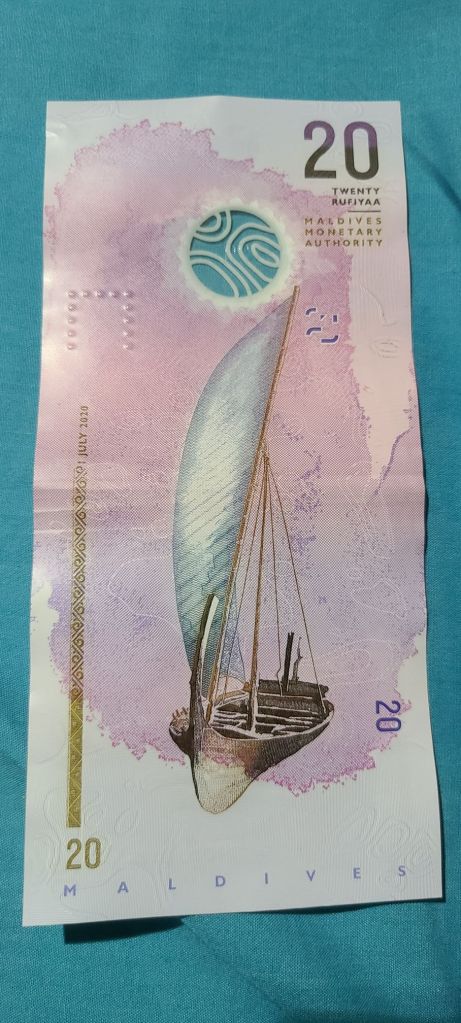
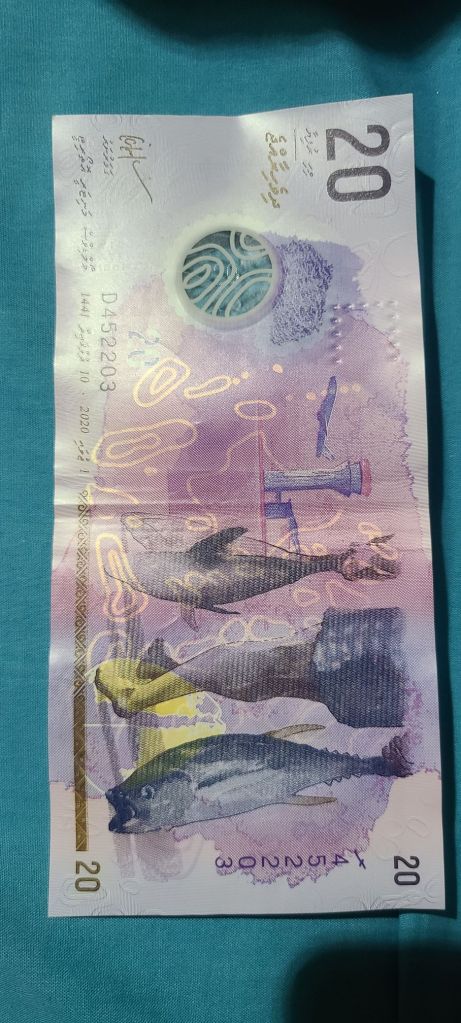
I feel very privileged to have visited and seen the “real” Maldives. Who knows how long those beautiful corally, sandy little islands surrounded by impossible blue water will remain above sea-level. The Maldivian government has made arrangements with several countries, India, Sri Lanka, and Australia, to accept the 500,000 Maldivians as climate refugees when the time comes and the dry corally land is inundated by the sea.
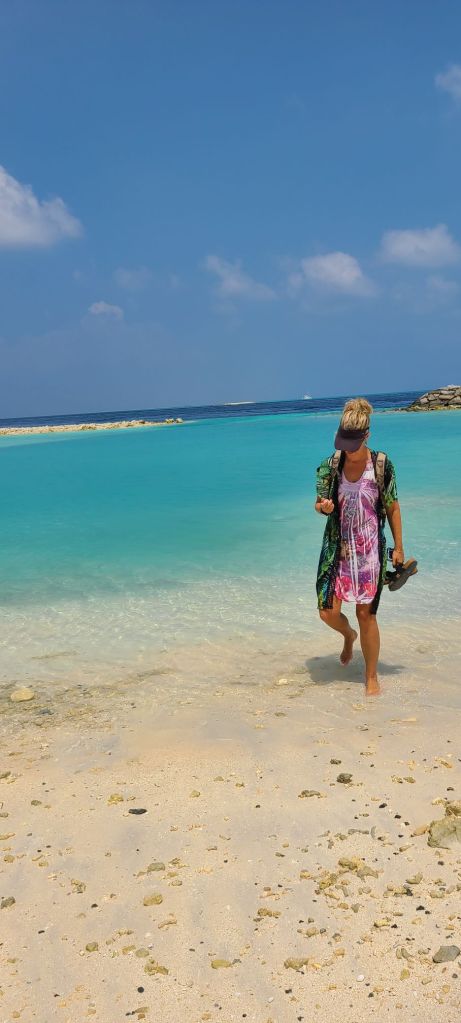
Maldives is very particular about how they deal with tourists, many of whom are honeymooners and divers. All tourists must have a hotel reservation and an outgoing airline ticket. So when I arrived in Kuala Lumpur to get on my flight to Maldives, the airline staff were not going to issue a boarding pass. I had all the correct paperwork from the agent, which stated that I was on a yacht, and I would be leaving on a yacht, but still, they had to make checks with Customs and I almost missed my flight.
The majority of Maldivians practice the Muslim faith. It is very strict compared to Malaysia, where the population seems to be quite tolerant of Western ways. For example, alcohol is illegal in Maldives. The only place you could buy a beer is at the resort islands.
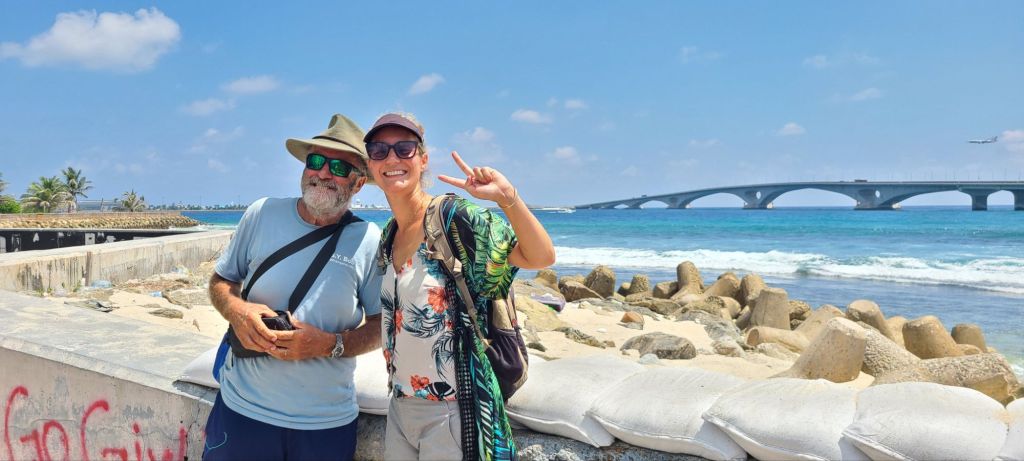
We discovered a really good supermarket. Red Wave was reasonably priced ( bearing in mind that everything is imported). We also walked the streets of Malé and Hulhumale and discovered some interesting shops and the funniest museum I’ve ever been into.
The museum was described in the guide books as a “must see.” The displays were labelled in Arabic and English stating that this piece of furniture is from “the olden days” and was from the sultan’s palace, and “blue and white crockery from the olden days”. It was worth the visit just for the comedy of labels. I learned nothing, except that there had been a famous band from the 1970s from Maldives called “the Olympians”, there were no photos, or history about them, just a guitar and an amp that this famous band allegedly used. I Googled the band later in the day, and they really weren’t famous. I couldn’t even confirm that they came from Maldives.
Monique and I enjoyed some snorkeling at a couple of the atolls where we were able to anchor. The water was gin clear and lots of beautiful fish, especially near the drop-offs. Sadly, the coral was mostly dead. There had been a bleaching event a few years ago, which has killed the coral. I believe the damage was done due to higher sea temperatures.
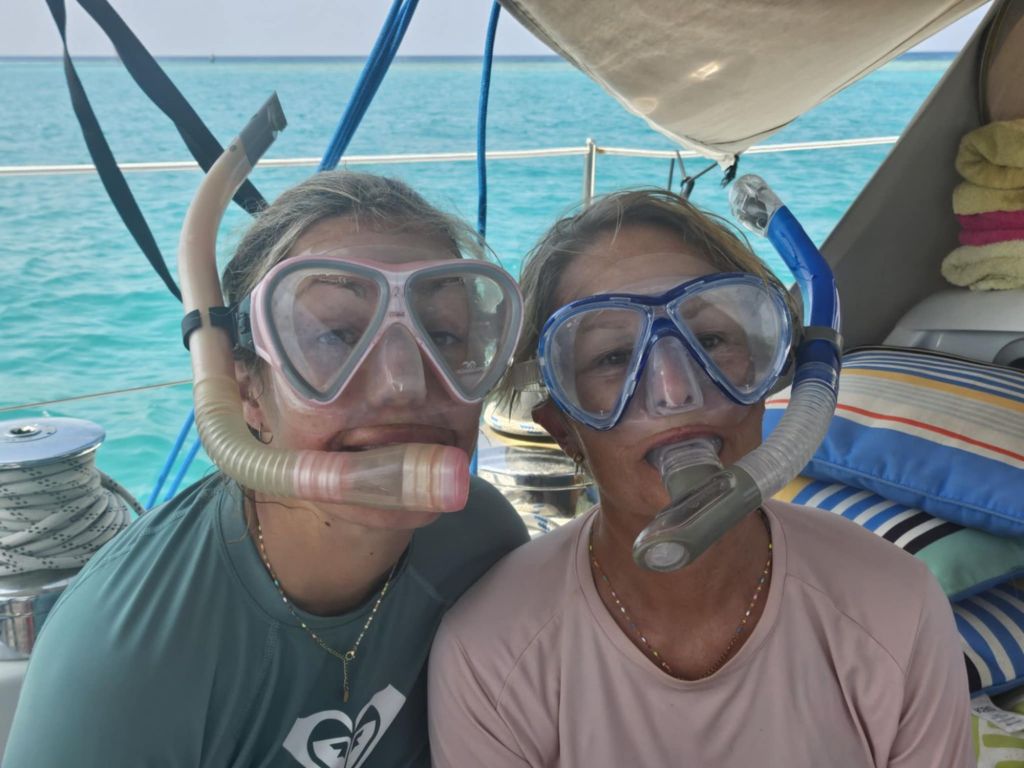
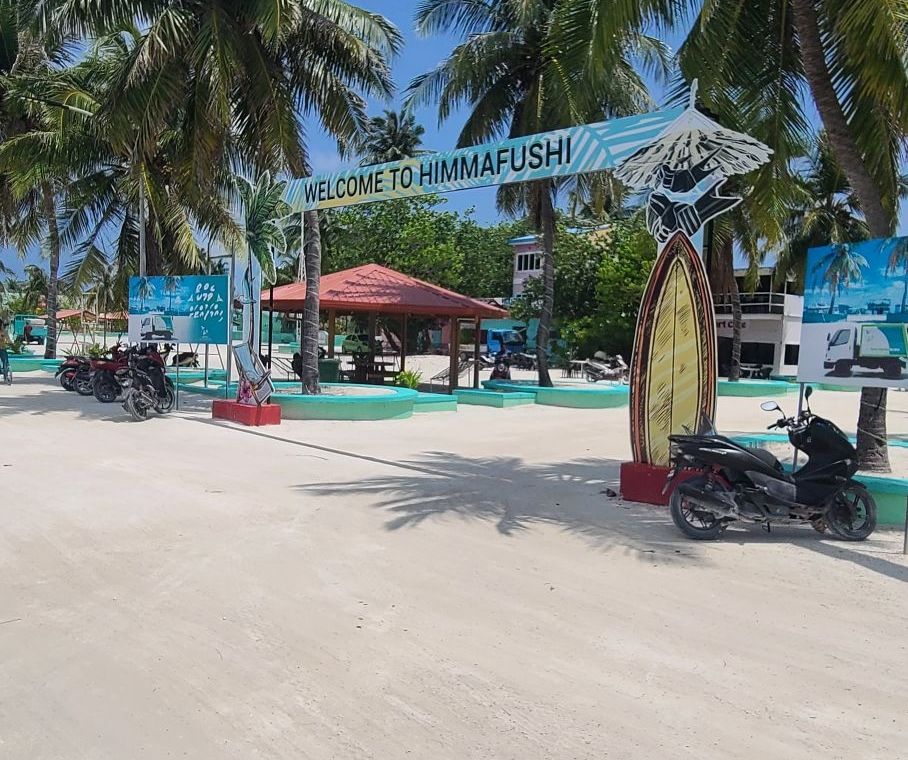
We joined a tour on Moniques’s last day day, visiting a sand bar, dolphin watching, lunch at Himmafushi, and swimming with the stingrays and fish. It was a great day out. We got talking to Mohammed, the man who owns the tour company. He was a font of knowledge. Here are some facts about Maldives:
1. Maldivians do not pay any income tax.
2. All of the resorts must be 51% owned by Maldivians (the other 49% can be owned by foreign investment).
3. There are no dogs in Maldives, except for 3 dogs that work at the airport. Those dogs are from Sri Lanka and are swapped out every 3 months. Apparently, it’s a Muslim thing, not touching dogs.
4. Education is free up to PHD level, and the government will pay for Maldivians to attend universities in other countries.
5. English is taught in schools to a very high level.
6. Health care is free for Maldivians, including travel to India or Sri Lanka for specialist treatment.
7. There are around 80 sea planes in Maldives. All are twin otters, and many pilots from Canada are relocating to Maldives to fly them.
8. Fishing nets and long-lines are banned in Maldives. The only method of fishing allowed is pole and line. Check out this YouTube video of Maldivian pole and line fishing for tuna. It’s incredible! https://youtu.be/8NS3Sbh9J4s?si=53FD7XC91MlIctSO

We tried to make our way north, up to Uligan to check out. We battled against strong, northerly winds, precarious anchorages, inaccurate charts, dodgy reef passes, and whirlpool currents. It was no good for our nerves🫣😬😵💫😳. Not to mention trying to book a tour or a night’s accommodation. It was impossible. In the end, we gave up and went back to the Hulhumale anchorage and embraced the grey-water and bin juice smell and the mozzies. We did find a very nice restaurant too. We shopped, had laundry done, cooked meals to freeze, and checked out as quickly as we could. Thanks, Maldives….it was certainly memorable.
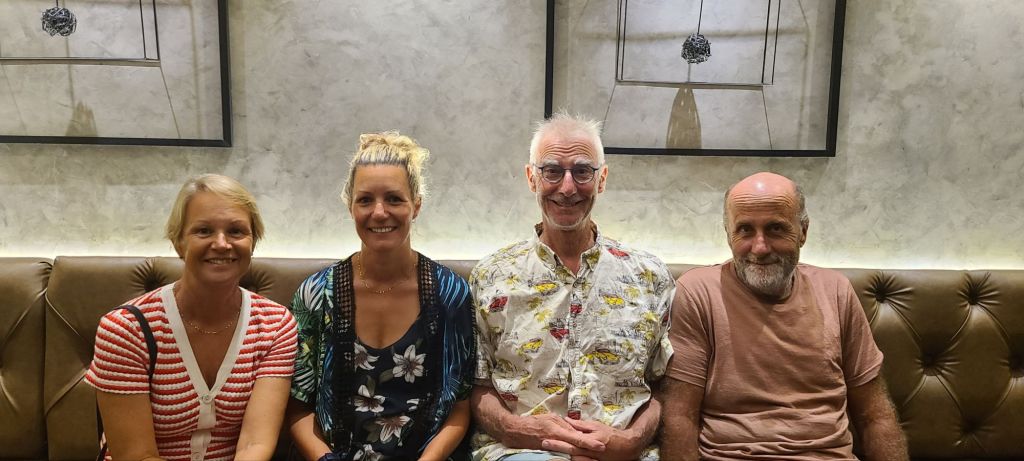


 Cruising Innocenti
Leave a reply to Monique Cancel reply