
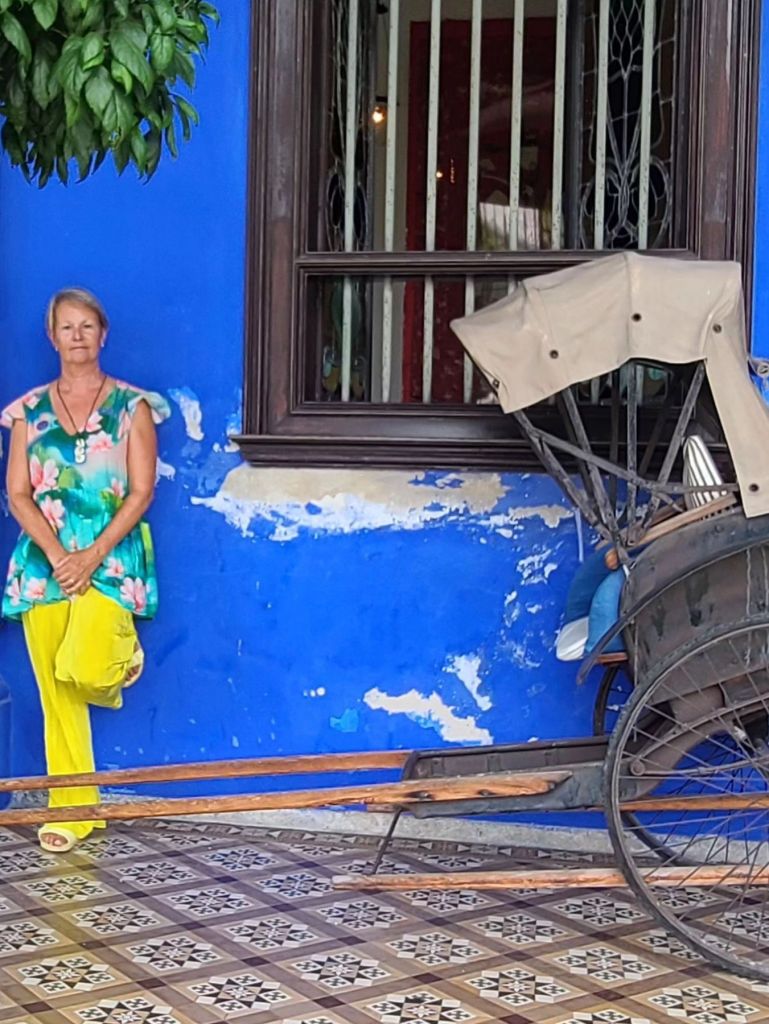
Penang turns out to be my favourite place in Southeast Asia so far. Imagine exotic Chinese shabby-chic, blended with British Colonial, Deco, and 1950s architecture. Throw in some Chinese and Indian temples, lots of narrow lanes, exquisite street art, one-way streets, food smells and the hubbub of daily lives, and there you have the vibe of Georgetown. It is the capital city of “the Staits Settlements” (Malacca Straits) described by UNESCO as having “a unique cultural and architectural landscape.” A melting pot of Colonial, Chinese, Malay and Indian culture, stunning renovations of old architecture alongside crumbling, paint-peeling, but functional terraced houses and shops. Beautiful street art is hidden away down back lanes, the colours, the smells, and a mind-blowing choice of exotic, delicious food for which Penang is so famous, make for a very memorable place to visit.
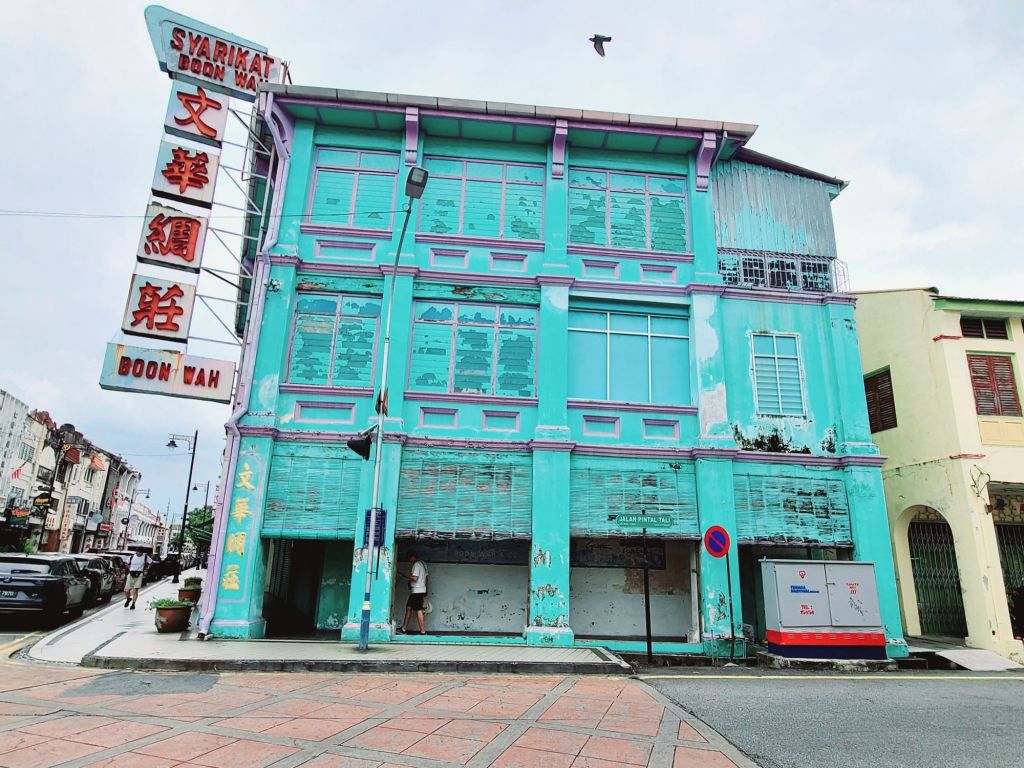
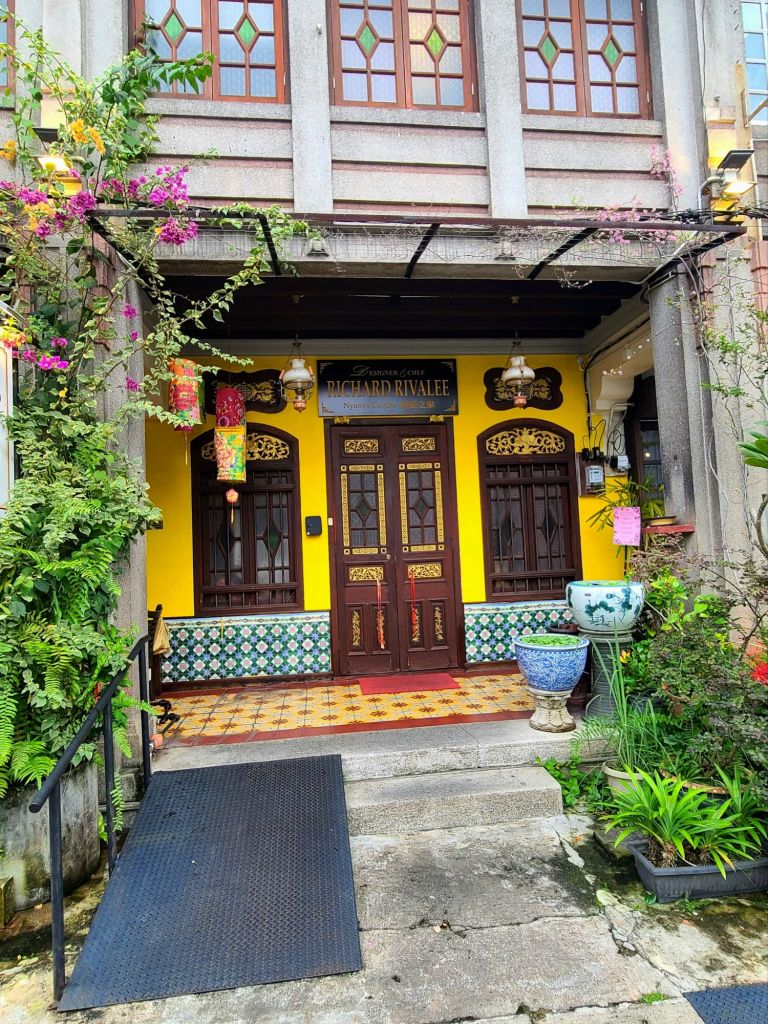
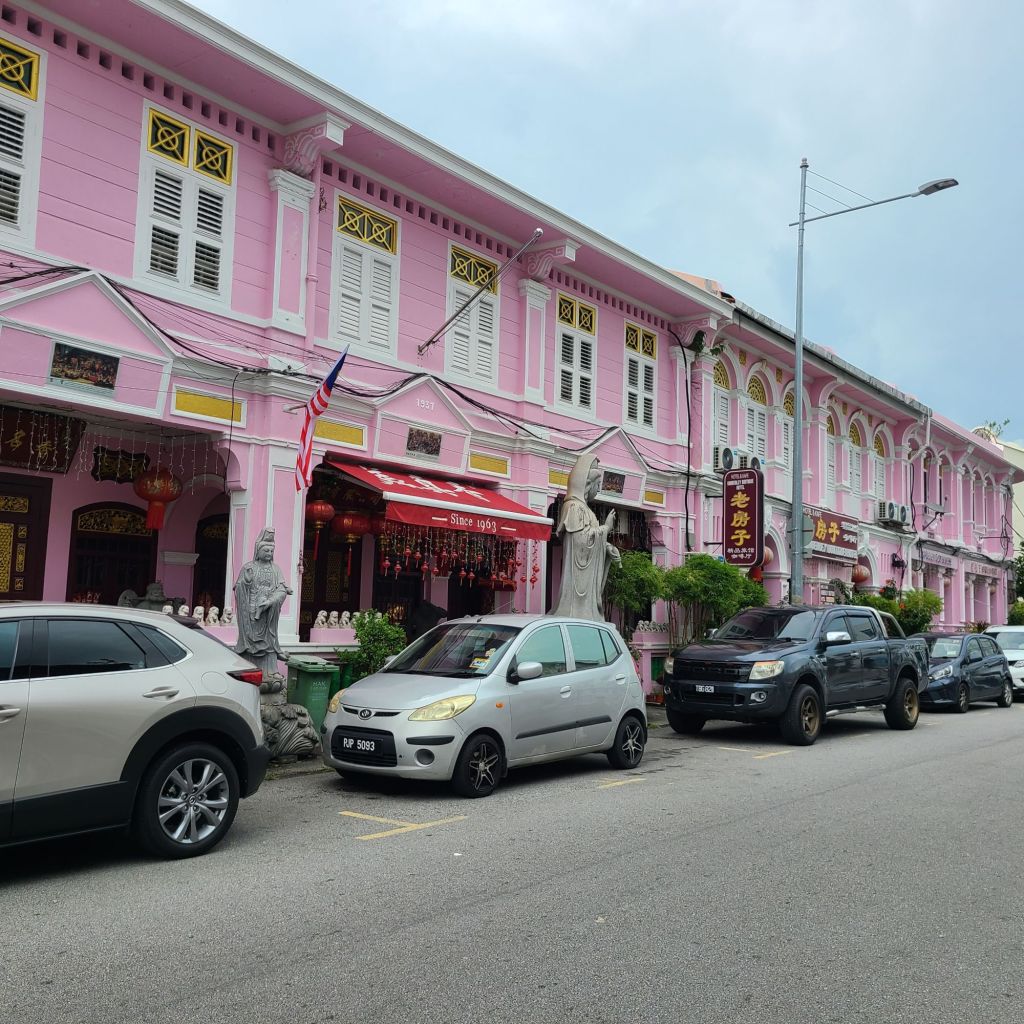
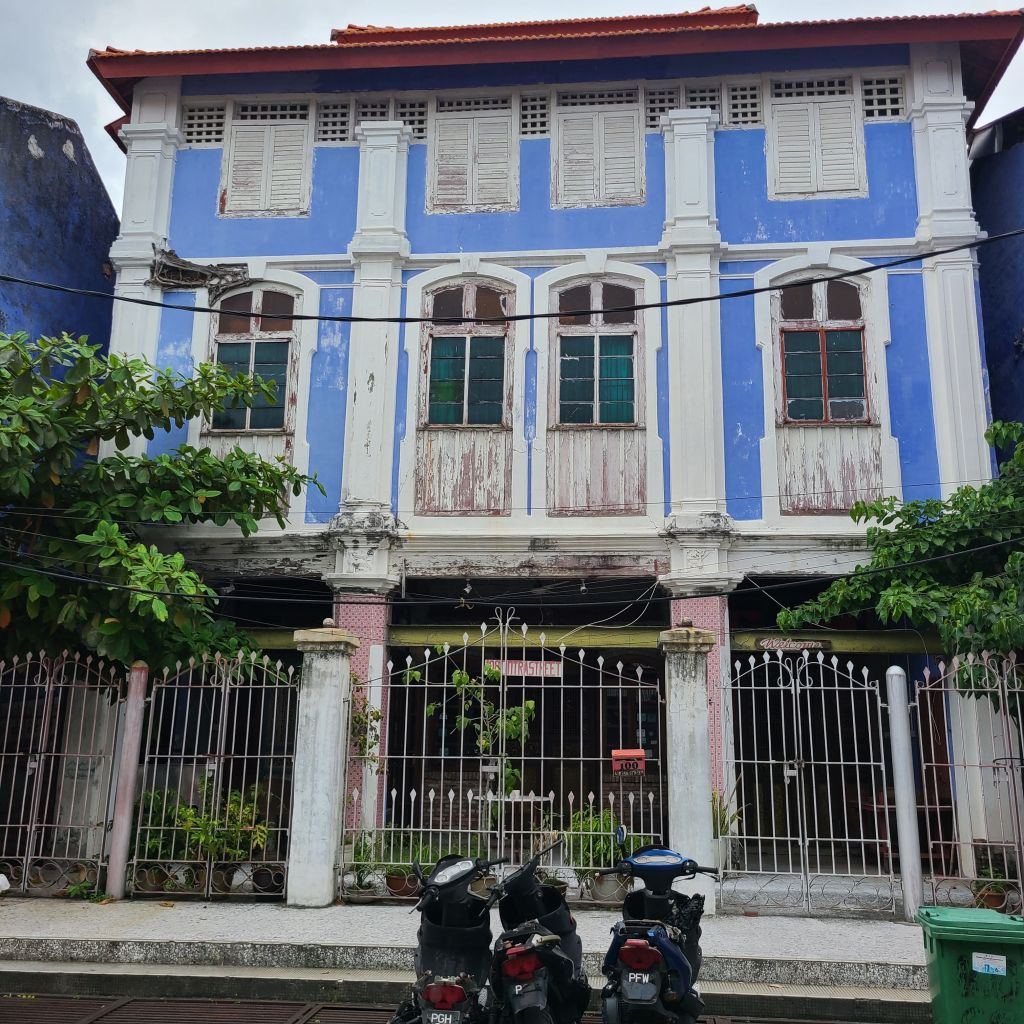
Apart from wandering around and soaking in the scenery, here are some “Must-dos”.
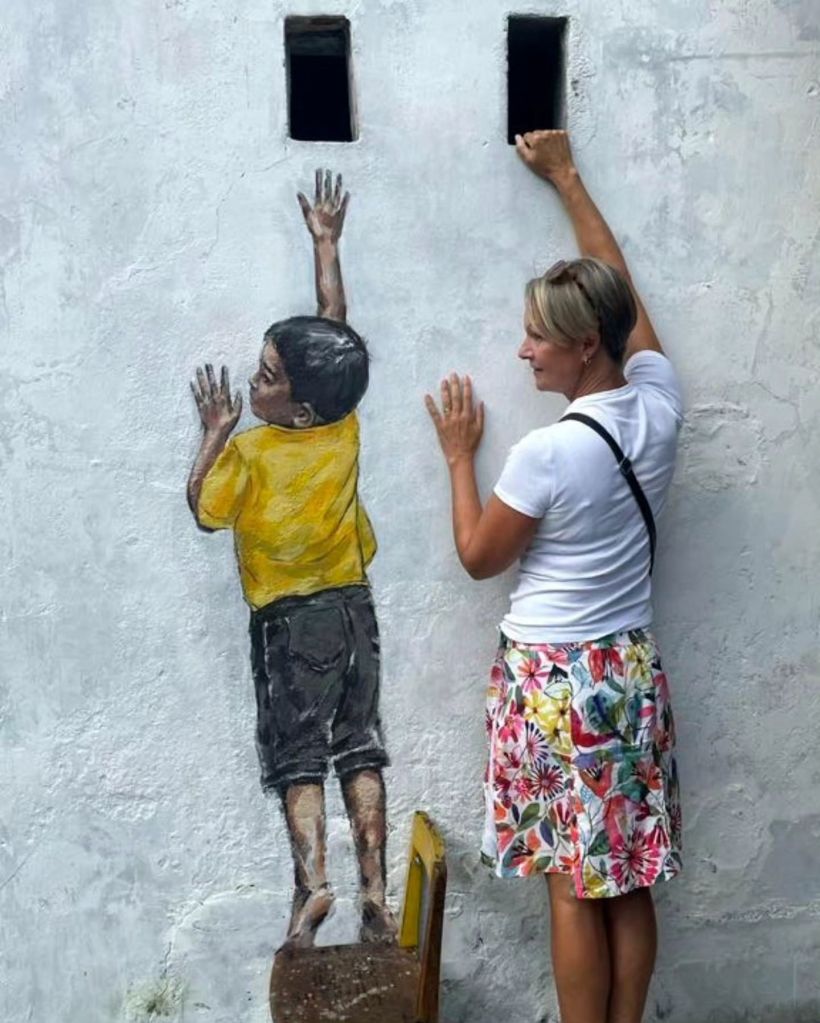
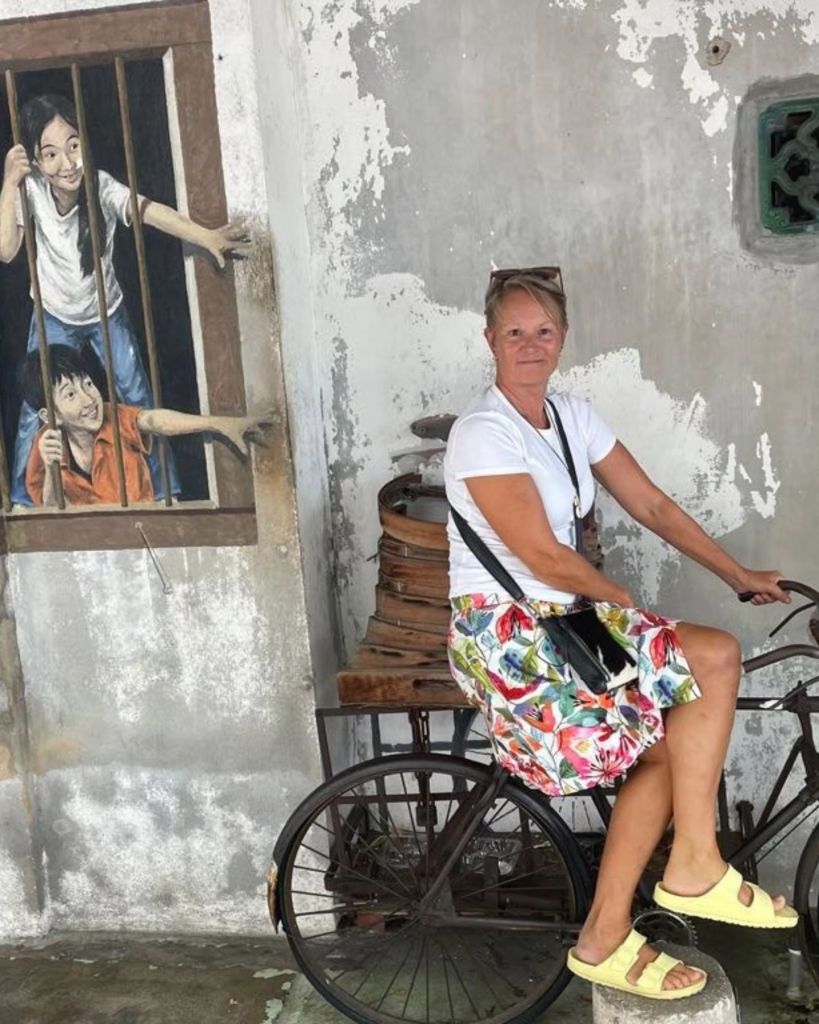
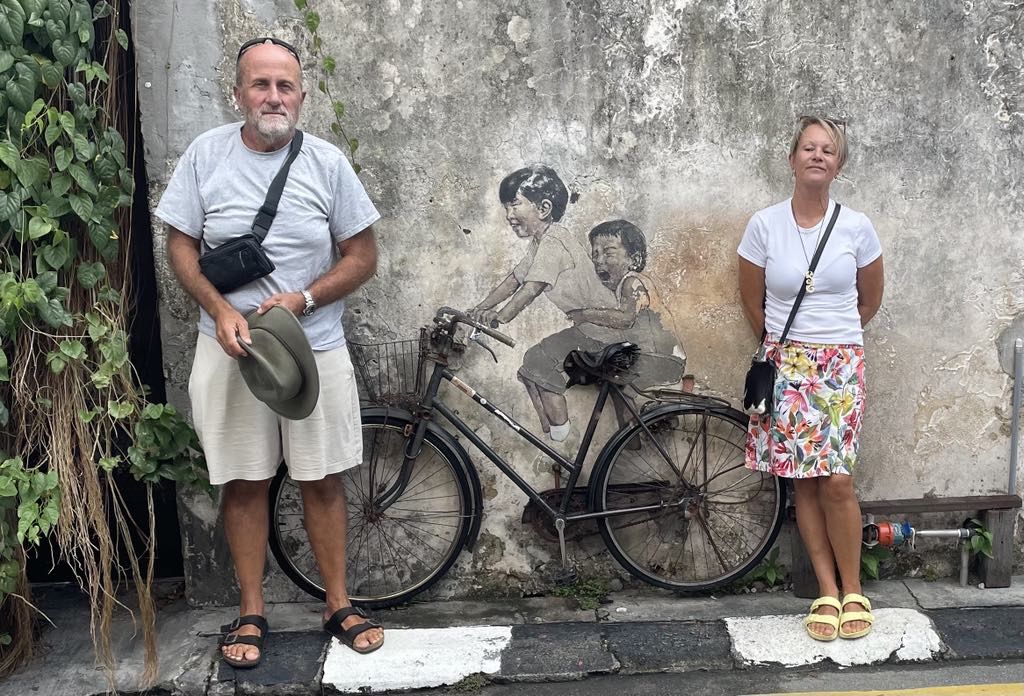
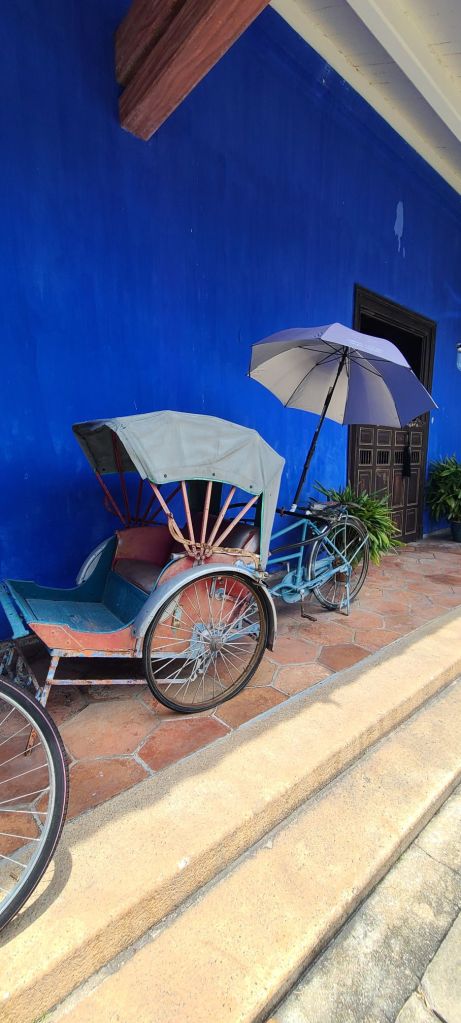
- Street Art: Nestled down unassuming lanes, on crumbling walls of heritage buildings are many of the well-known artworks of “ZACH” Ernest Zacharevic, a Lithuanian born artist. He incorporates real objects into the artworks that often include endearing images of children. The images have become iconic in Penang, and we actually saw the artist touching up some of his paintings that had deteriorated. We didn’t get to see all of them, but below are some photos of a few. A great way to see the art is by trishaw. Negotiate the price, and choose a driver who knows his stuff. It sure beats walking in the heat. Expect to pay about 50 rights ($20 NZ) for an hour.


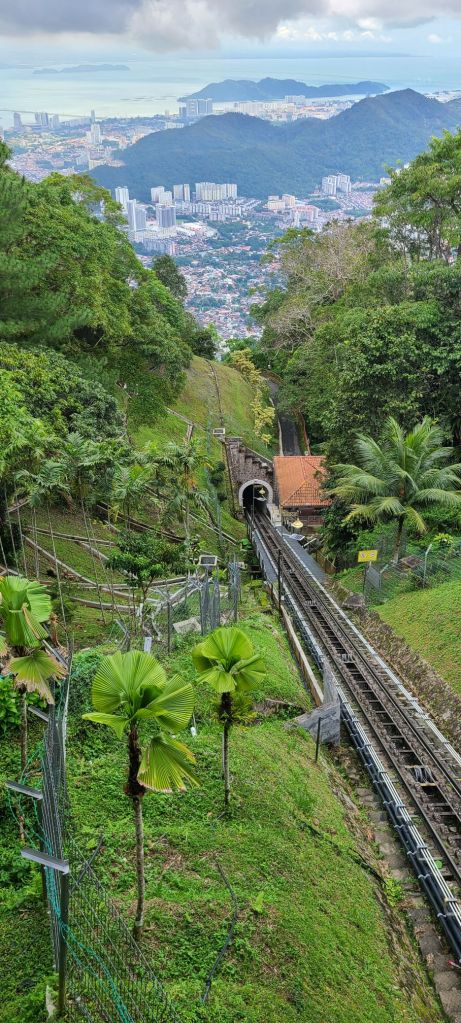
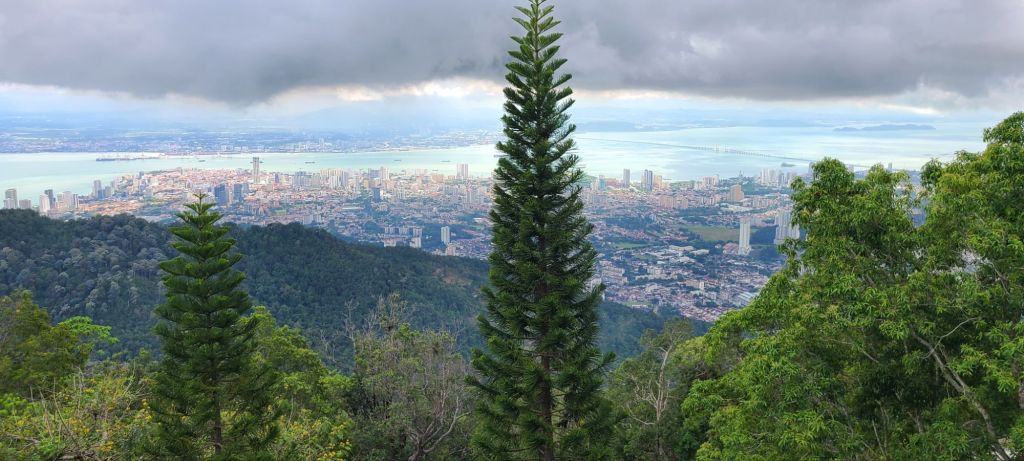
- Penang Hill: Ride the funicular to the top of the hill, which gives you a great view of Penang. There are walking tracks through the forest and plenty of wildlife. There are also two temples at the top of the hill. I enjoyed a walk in the cool air.
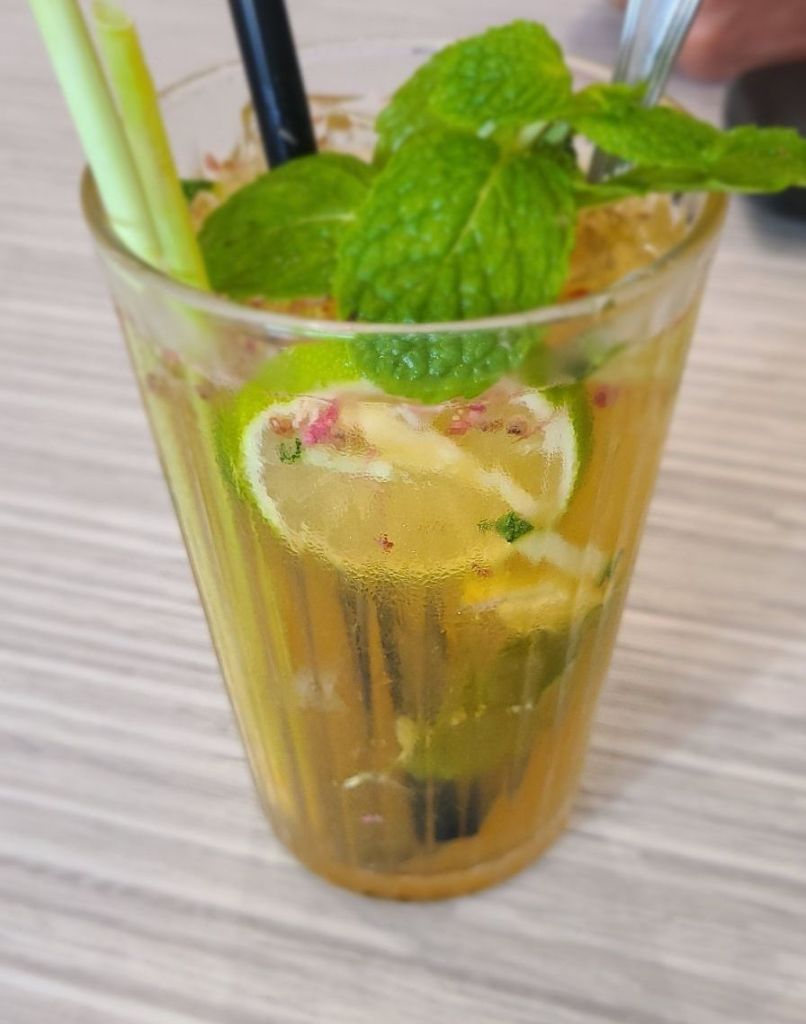
- The food: Amazing! The problem is what to choose and where to go. Thank goodness for Google! My searches were generally “great food near me.” We ended up going quite up-market on the first night. We went to a place called “Soul Bar and Cafe,” which was in a heritage building and was Malay/Chinese/ Indian fusion. Four dishes, dessert, and mocktails for 130 ringits ($50 NZ).
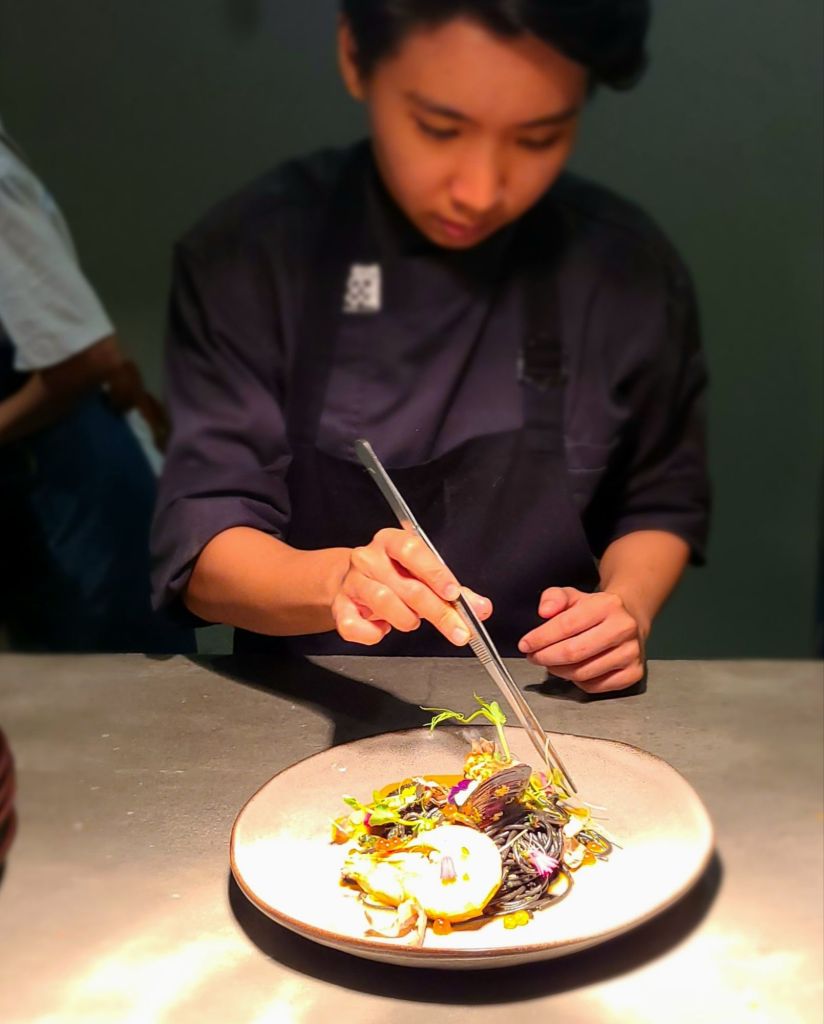
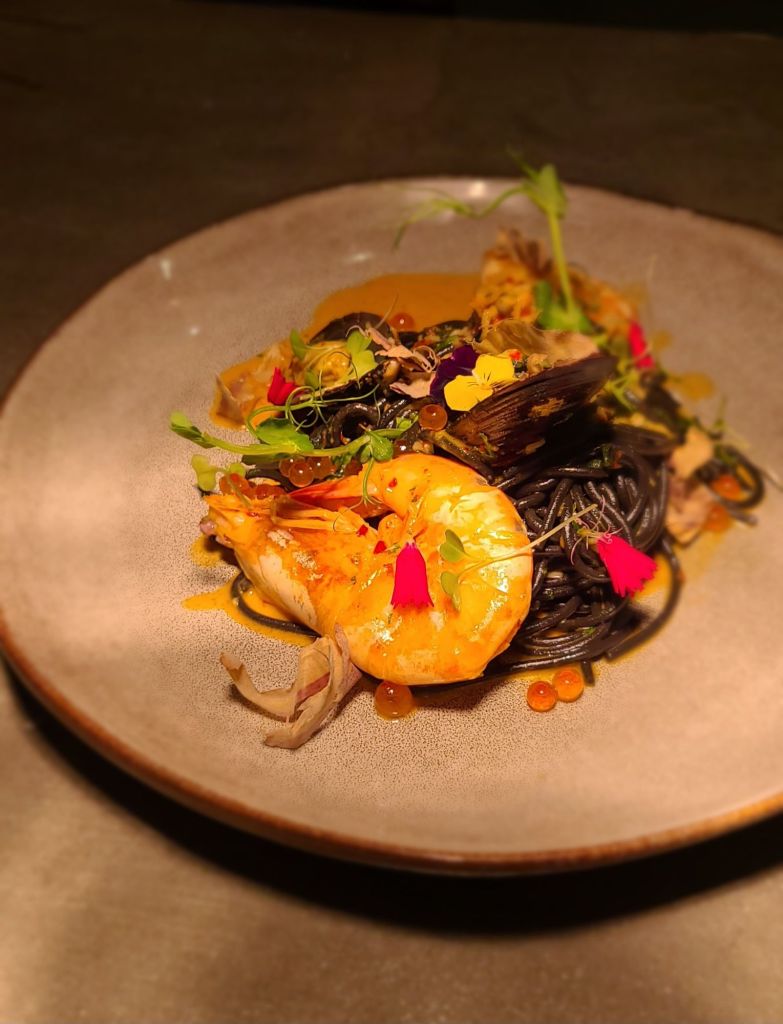


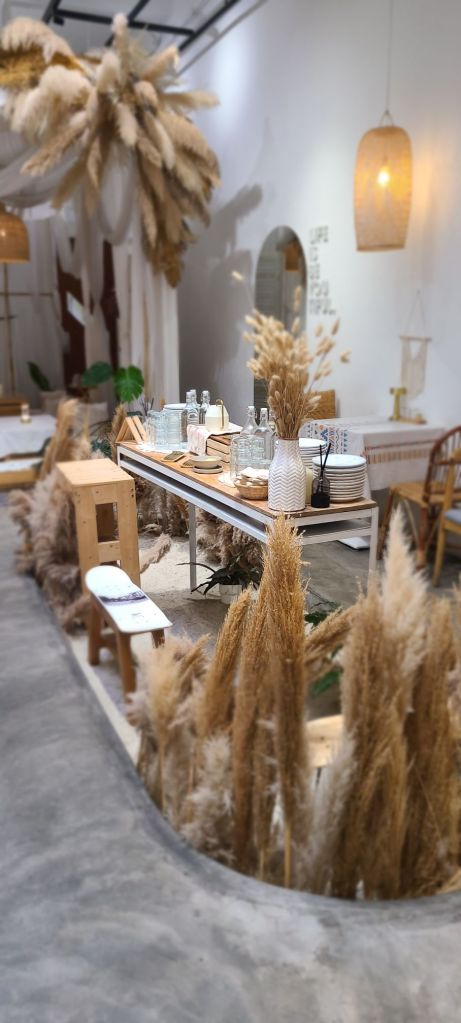
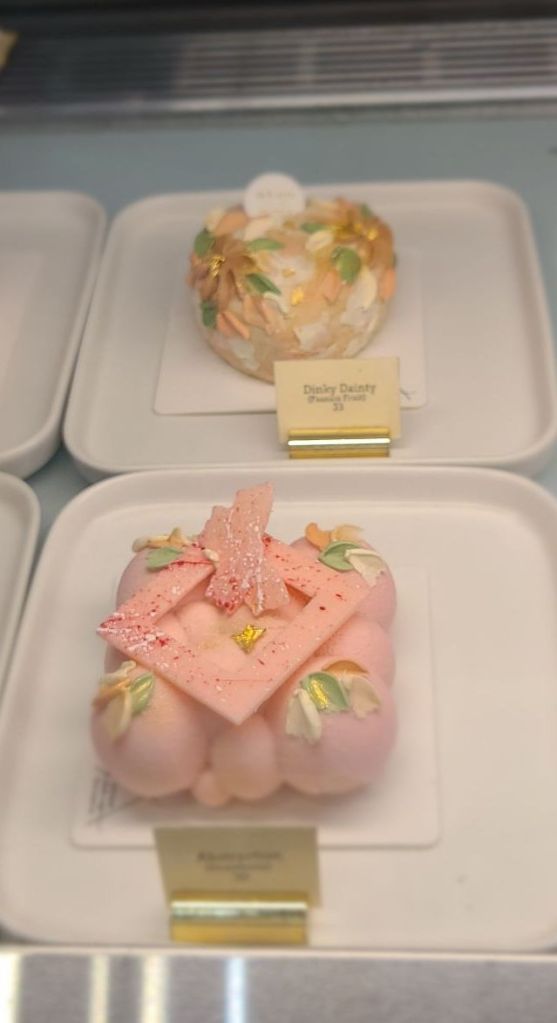
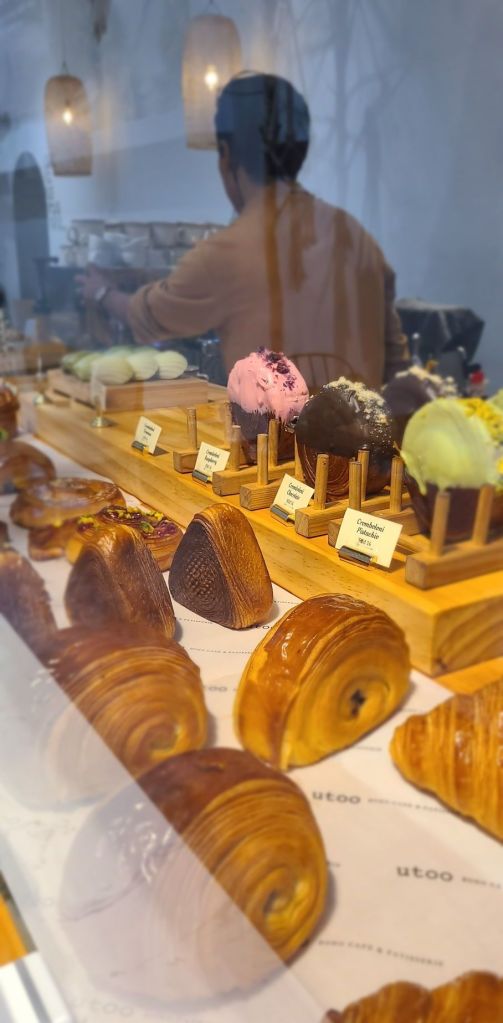
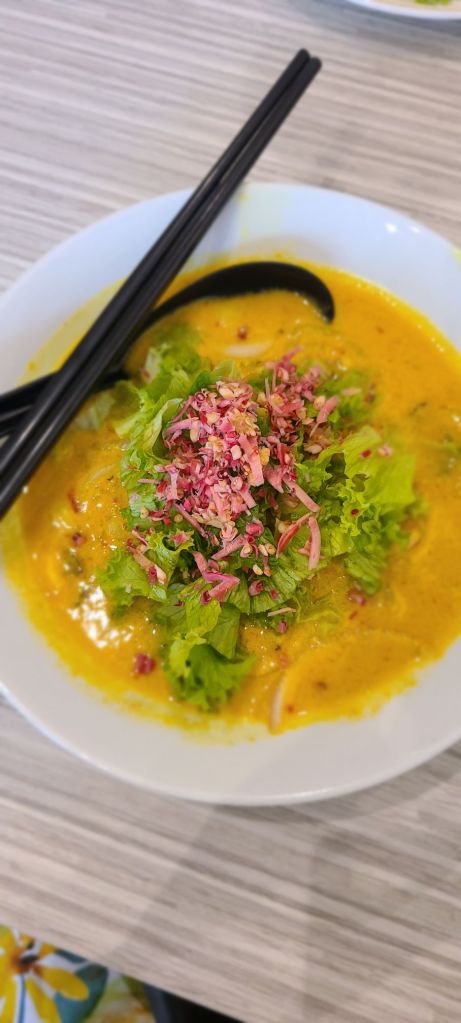
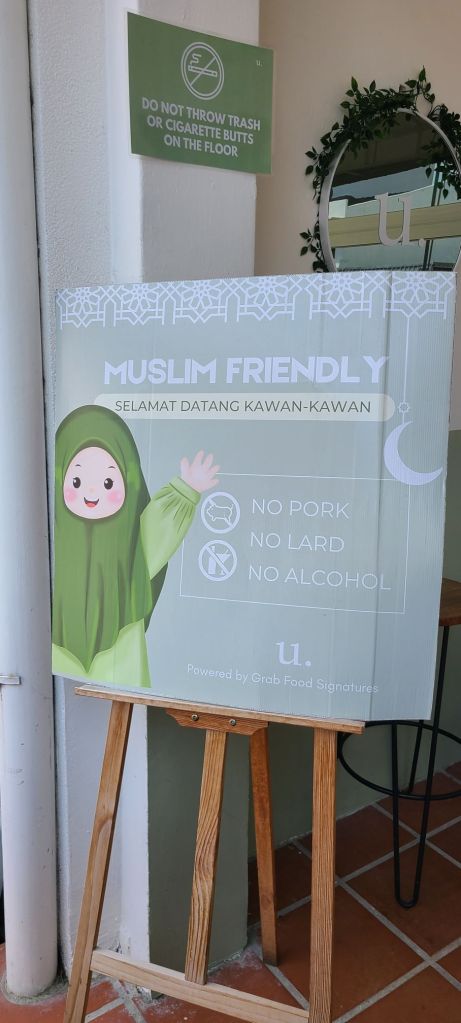
The next night we went to a cheap and cheerful. Amazing again! Laksalicious was great, also Muslim-friendly with no pork products or alcohol at this cafe.
There is a big Chinese influence in Penang, with 40% of the population being Chinese, but there really is a unique style of Penang food, from the street stalls to the up-market restaurants. Penang is worth the trip just for the food!
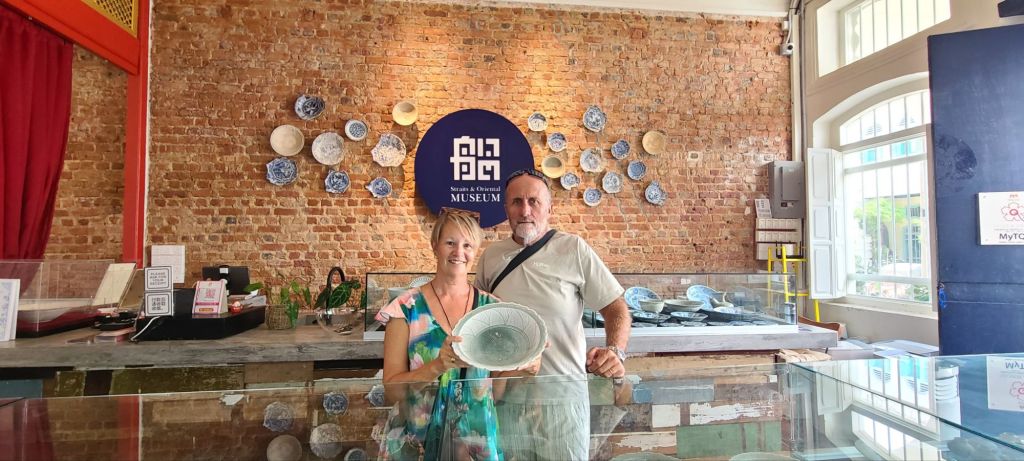
- The Straits and Oriental Museum: This was a little hidden gem! A private collection of ceramics retrieved from pirate ship wrecks. I had no idea how ceramics could explain the history of Penang so well. A very knowledgeable guide told us the stories of pirates and trading through the Malacca Straits and how Penang has been the centre of trading in Asia over the centuries. It was brilliant! I didn’t realise that the pirates in this area were plundering valuable ceramics from China, not gold and jewels. The British East India Company purchased the Straits Settlement in 1786, but before that, Penang was the centre of trade, East meets West, silk and spice, and ceramics. The Japanese occupied Penang in WWII, and it was the first place on the Malay Peninsula to be liberated by the British in 1945.
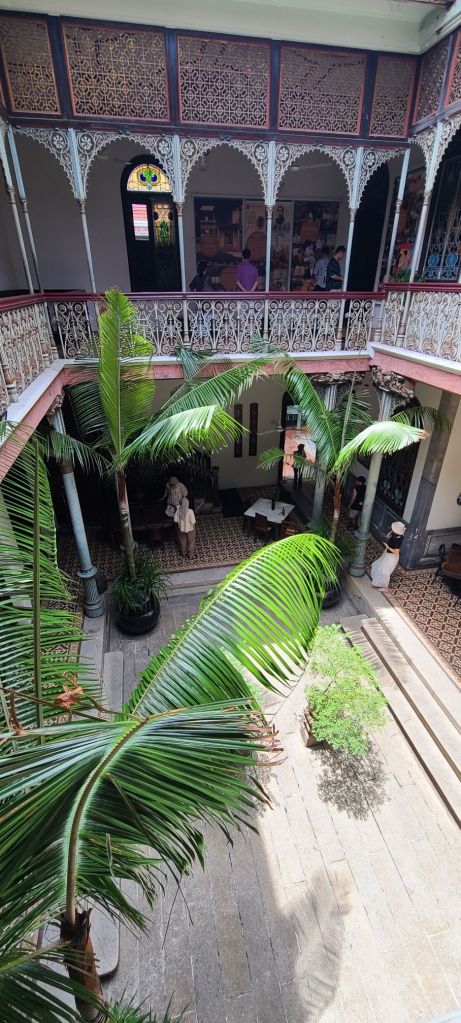
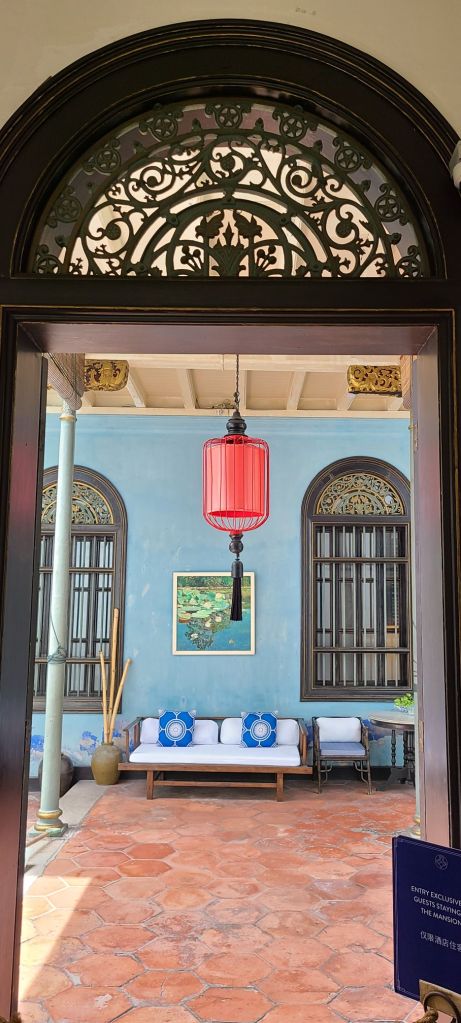
- The Cheong Fatt Tze Blue Mansion: it was once considered the grandest residence in South East Asia. It was built in the late 19th century by Cheong Fatt Tze for his favourite 7th wife. He was an industrialist, politician, and philanthropist and is described as the “Rockerfeller of Asia.” This is another great insight into the history of the area. The Blue Mansion also features in a number of movies, including Indochine and Crazy Rich Asians. That cobalt blue colour is spectacular.
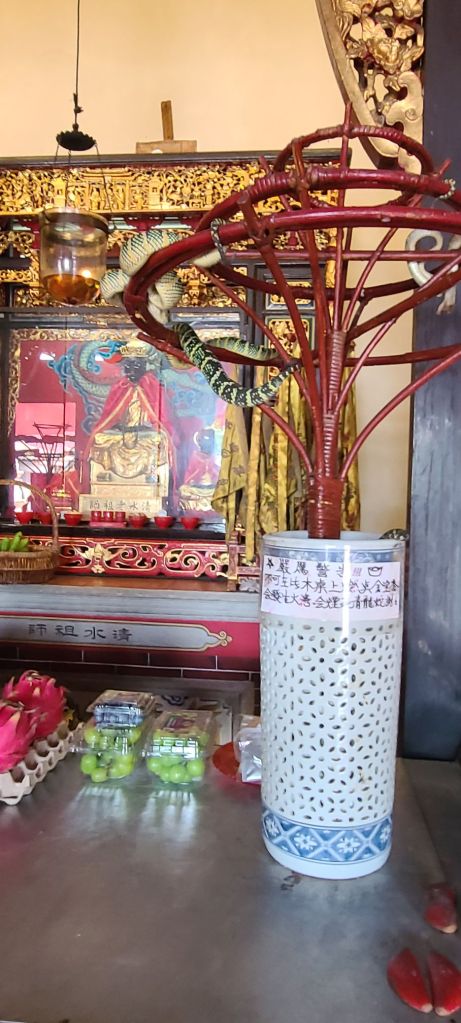
- The Snake Temple: We had a bit of time to fill in on the way back to the airport, so we made a stop at the Snake Temple. It’s a Chinese temple nestled amongst industrial buildings. It’s kind of shabby, but I had to remind myself that it is a place of worship for the Buddhists and Taoists not a gimmicky tourist trap. It’s also a
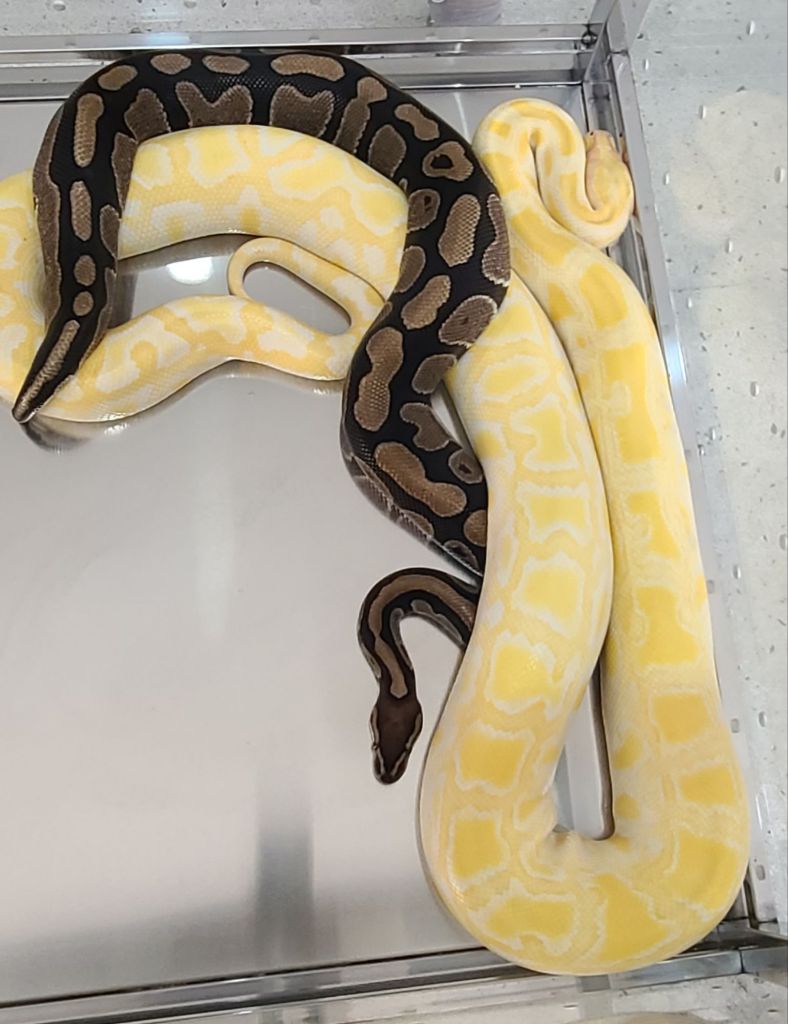
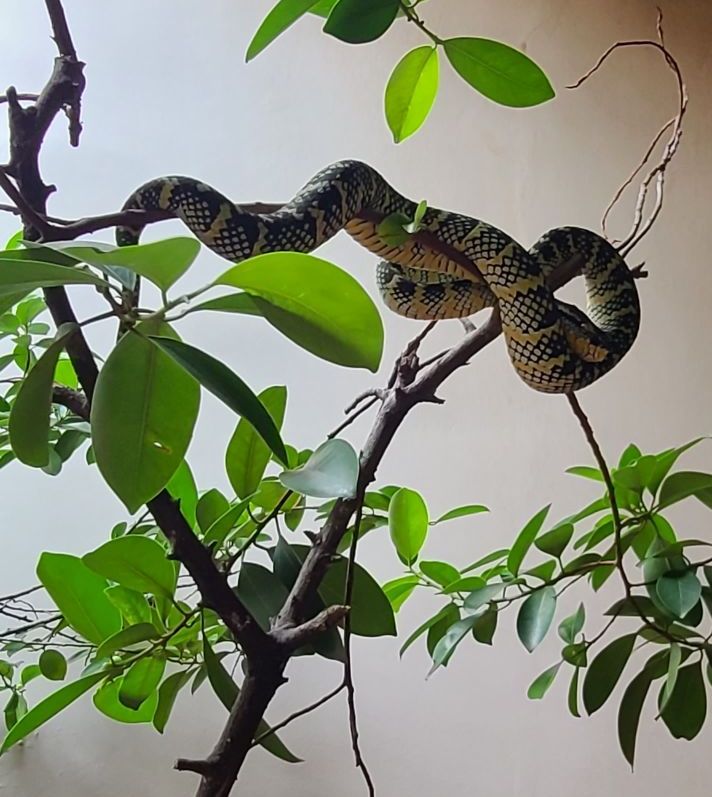
- well-known refuge for snakes. It is believed that the snakes are the reincarnated disciples of the deified Buddhist monk master, Qingshui, to whom the Temple is dedicated. There are venomous pit vipers or Temple vipers around the temple itself, in the potted plants, and hanging from picture frames. They have apparently been milked of their venom, but it’s not advised to touch them. We were trying to work out whether they were real. They were very still, and they looked velvety. We were the only people there, apart from some praying devotees. There’s a breeding area out the back, where you can see the vipers in the trees if you look carefully enough. I spotted at least 6. These are most certainly real. There’s a nasty side room where the most beautiful pythons were being kept in glass tanks. The snake-keepers were trying to make a buck by letting tourists hold the snakes and have a photo. I hate to see such amazing creatures being held in captivity like that, so there was no way I wanted a photo holding the snakes. It’s worth a look if you have a fascination for snakes.
Penang is awesome! I’m definitely going to visit again….next time without the stomach bug that robbed us of at least one day🤢🤮.


 Cruising Innocenti
Leave a comment